Back to Resources
For EducationAI literacyeducationAI in schools
AI Literacy Education: Teaching the Next Generation to Think Critically in an AI World
AI literacy is the fourth pillar of modern education — here's how to teach it in ways that build critical thinking, not dependency.
June 19, 2026· Nissi Elias
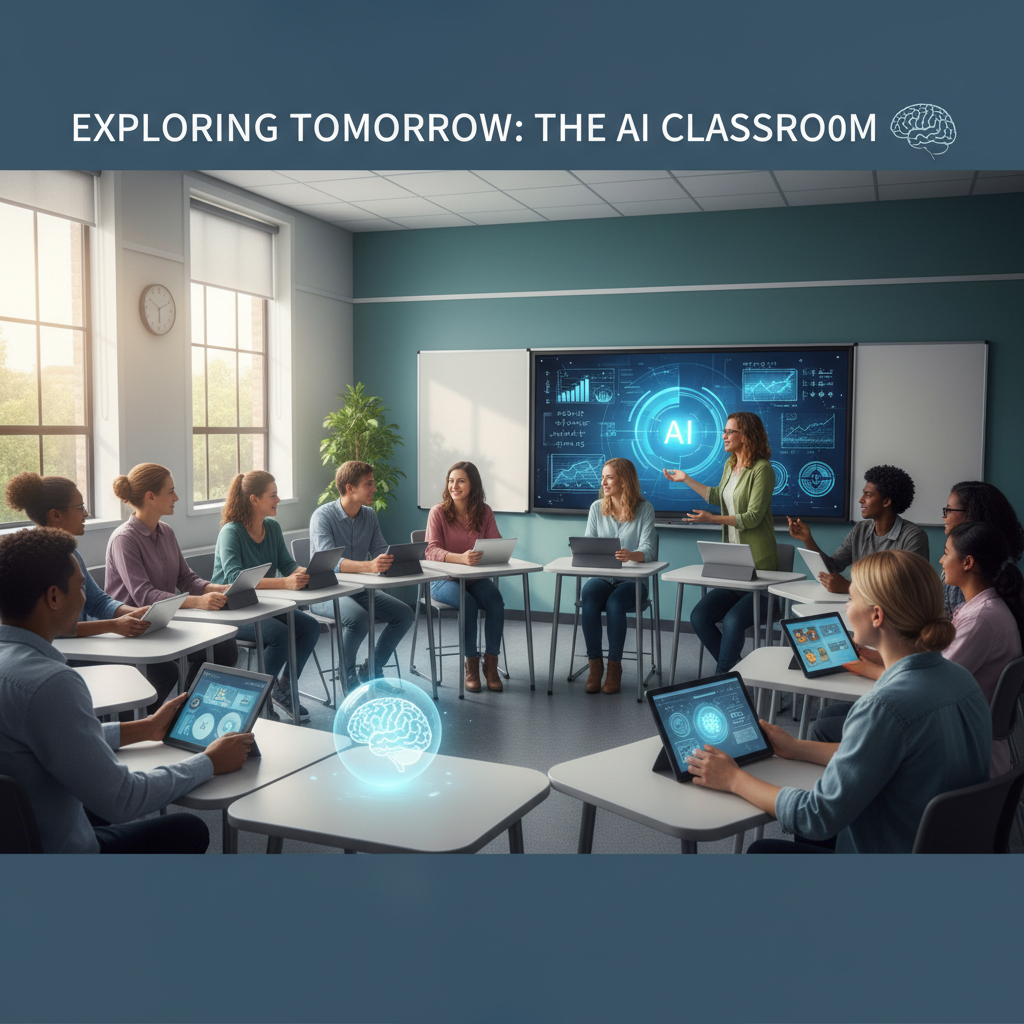
<h2>The New Literacy</h2><p>Reading, writing, arithmetic — and now, AI.</p><p>AI literacy is no longer optional. It's the fourth pillar of modern education. But most schools are teaching it wrong.</p><p>They focus on tools: which chatbot to use, how to write prompts, what features exist. That's like teaching reading by memorizing font styles.</p><p><strong>Real AI literacy is deeper.</strong> It's about understanding what AI is, how it shapes thinking, and how to use it without surrendering agency.</p><p>This guide is for educators, parents, and lifelong learners who want to build AI literacy the right way.</p><h2>What Is AI Literacy? (And What It Isn't)</h2><h3>AI Literacy Is NOT:</h3><ul><li>Knowing every AI tool on the market</li><li>Being able to write complex prompts</li><li>Using AI for every task</li></ul><h3>AI Literacy IS:</h3><ul><li>Understanding how AI works (and where it fails)</li><li>Recognizing AI's influence on your thinking</li><li>Knowing when to use it — and when to turn it off</li><li>Asking critical questions about AI outputs</li></ul><p>AI literacy isn't technical mastery. It's <strong>critical consciousness</strong> in an AI-saturated world.</p><h2>The 5 Core Competencies of AI Literacy</h2><h3>1. Mechanistic Understanding</h3><p>You don't need to code. But you should understand:</p><ul><li>AI predicts patterns; it doesn't "know" truth</li><li>AI reflects training data (including biases)</li><li>AI can hallucinate confidently</li><li>AI has no intent, ethics, or consciousness</li></ul><p><strong>Practice:</strong> Ask learners to explain how AI generates responses — in simple terms. If they say "it knows," correct them: "It predicts."</p><h3>2. Critical Evaluation</h3><p>Teach learners to interrogate AI outputs:</p><ul><li>What sources might this be based on?</li><li>What biases could be present?</li><li>What's missing from this answer?</li><li>How would I verify this?</li></ul><p><strong>Practice:</strong> Give AI-generated text and have learners fact-check it. They'll find errors — and build skepticism.</p><h3>3. Ethical Reasoning</h3><p>AI raises hard questions:</p><ul><li>Is it ethical to use AI for homework?</li><li>Who owns AI-generated content?</li><li>What happens to jobs when AI automates them?</li><li>Should AI make decisions about people?</li></ul><p><strong>Practice:</strong> Host debates. "Should AI grade essays?" "Should AI diagnose medical conditions?" There are no easy answers — that's the point.</p><h3>4. Creative Partnership</h3><p>AI is best used as a collaborator, not a replacement:</p><ul><li>Brainstorm together, then refine manually</li><li>Use AI for first drafts, add human voice in revisions</li><li>Let AI suggest, human decides</li></ul><p><strong>Practice:</strong> Assign projects where AI is required — but the final product must be unmistakably human.</p><h3>5. Self-Awareness</h3><p>The most important competency: knowing yourself.</p><ul><li>When do I reach for AI out of laziness vs. efficiency?</li><li>What tasks do I want to keep human-only?</li><li>How does AI use affect my confidence?</li></ul><p><strong>Practice:</strong> Have learners keep an "AI journal" — tracking when they use it, why, and how it made them feel.</p><h2>AI Literacy by Age Group</h2><h3>Elementary (Ages 5-10)</h3><ul><li>Focus: AI is a tool, not a person</li><li>Activities: "Ask AI a question, then fact-check it together"</li><li>Boundary: No unsupervised AI use</li></ul><h3>Middle School (Ages 11-13)</h3><ul><li>Focus: AI can be wrong; critical thinking matters</li><li>Activities: "Find the bias in this AI response"</li><li>Boundary: AI for brainstorming only, not final work</li></ul><h3>High School (Ages 14-18)</h3><ul><li>Focus: Ethical use, creative partnership</li><li>Activities: "Use AI to draft, then revise with your unique voice"</li><li>Boundary: Disclose AI use; understand academic integrity</li></ul><h3>Adults & Lifelong Learners</h3><ul><li>Focus: Agency, boundaries, lifelong adaptation</li><li>Activities: "Audit your AI use; identify over-reliance"</li><li>Boundary: Regular AI fasts; protect creative practices</li></ul><h2>The Role of Educators</h2><p>Educators have a dual responsibility:</p><ol><li><strong>Teach AI literacy</strong> — integrate it into curricula</li><li><strong>Model AI literacy</strong> — use AI thoughtfully in your own work</li></ol><p>Students learn more from what you <em>do</em> than what you <em>say</em>. If you use AI recklessly, they will too.</p><h2>Common Pushback (And How to Respond)</h2><p><strong>"AI will just make students lazy."</strong><br/>Response: So will calculators, spell-check, and Google. The question isn't whether to use AI — it's <em>how</em> to use it well.</p><p><strong>"We should ban AI in schools."</strong><br/>Response: Ban it from what? Students have smartphones. The goal is education, not prohibition.</p><p><strong>"I don't understand AI myself."</strong><br/>Response: You don't need to be an expert. You need to be curious. Learn alongside your students.</p><h2>The Stakes</h2><p>We're raising the first generation that will grow up with AI as a constant companion. They'll face choices we can't imagine:</p><ul><li>Should I let AI choose my career path?</li><li>Should I trust AI relationship advice?</li><li>Should I let AI write my college essay?</li></ul><p>AI literacy isn't just about using tools. It's about <strong>preserving human agency</strong> in a world that increasingly automates decision-making.</p><h2>Ready to Build AI Literacy in Your Community?</h2><p>I work with schools, educators, and parent communities to build AI literacy programs that are practical, age-appropriate, and human-centered.</p><p><a href="/consulting">Learn more about AI education consulting</a> — or <a href="/book">book a session</a> to discuss your specific needs.</p>